Êxodo 20 Explicado: Os Dez Mandamentos no Contexto Bíblico
Redação Bíblia Online Publicado em
- Publicado em .
- Atualizado em .
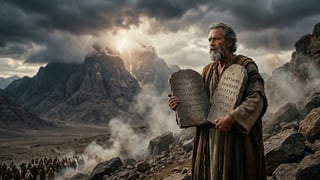
Em Êxodo 20, Deus entrega os Dez Mandamentos ao povo recém-liberto da escravidão no Egito. As ordens não foram dadas como condição para Israel ser salvo, mas como padrão de vida para uma nação que Deus já havia resgatado.
O fundamento da aliança: redenção antes do dever
And the Lord spoke all these words, saying: I am the Lord thy God, who brought thee out of the land of Egypt, out of the house of bondage.(Exodus 20:1,2)
A lei começa com um lembrete histórico: Deus se apresenta como aquele que tirou o povo da escravidão. A graça vem antes da exigência. Israel não obedece para conquistar a liberdade, mas porque já é livre.
Este artigo faz parte de Estudos Bíblicos Estudo de Livros
A relação com Deus: fidelidade e adoração exclusiva
Thou shalt have no other gods beside me. Thou shalt not make to thyself an idol, nor likeness of anything, whatever things are in the heaven above, and whatever are in the earth beneath, and whatever are in the waters under the earth. Thou shalt not bow down to them, nor serve them; for I am the Lord thy God, a jealous God, recompensing the sins of the fathers upon the children, to the third and fourth generation to them that hate me, and bestowing mercy on them that love me to thousands of them, and on them that keep my commandments. Thou shalt not take the name of the Lord thy God in vain; for the Lord thy God will not acquit him that takes his name in vain. Remember the Sabbath day to keep it holy. Six days thou shalt labor, and shalt perform all thy work. But on the seventh day is the Sabbath of the Lord thy God; on it thou shalt do no work, thou, nor thy son, nor thy daughter, thy servant nor thy maidservant, thine ox nor thine ass, nor any cattle of thine, nor the stranger that sojourns with thee. For in six days the Lord made the heaven and the earth, and the sea and all things in them, and rested on the seventh day; therefore the Lord blessed the seventh day, and hallowed it.(Exodus 20:3-11)
Os quatro primeiros mandamentos definem a lealdade exclusiva ao Senhor. Proíbem adorar outros deuses e fabricar imagens para tentar representar o Criador, condenam o uso leviano do Seu nome e estabelecem o descanso no sábado como sinal de confiança na providência divina.
A relação com o próximo: justiça e limites comunitários
Honor thy father and thy mother, that it may be well with thee, and that thou mayest live long on the good land, which the Lord thy God gives to thee. Thou shalt not commit adultery. Thou shalt not steal. Thou shalt not kill. Thou shalt not bear false witness against thy neighbor. Thou shalt not covet thy neighbor’s wife; thou shalt not covet thy neighbor’s house; nor his field, nor his servant, nor his maid, nor his ox, nor his ass, nor any of his cattle, nor whatever belongs to thy neighbor.(Exodus 20:12-17)
Os mandamentos seguintes protegem a convivência comunitária: honra aos pais, santidade da vida contra o homicídio, fidelidade conjugal, respeito à propriedade alheia e compromisso com a verdade. A série termina proibindo a cobiça — mostrando que a obediência bíblica não julga apenas as ações exteriores, mas alcança as intenções do coração.
O temor do povo e a mediação no monte
And all the people perceived the thundering, and the flashes, and the voice of the trumpet, and the mountain smoking; and all the people feared and stood afar off, and said to Moses, Speak thou to us, and let not God speak to us, lest we die. And Moses says to them, Be of good courage, for God is come to you to try you, that his fear may be among you, that ye sin not. And the people stood afar off, and Moses went into the darkness where God was. And the Lord said to Moses, Thus shalt thou say to the house of Jacob, and thou shalt report it to the children of Israel, Ye have seen that I have spoken to you from heaven. Ye shall not make to yourselves gods of silver, and gods of gold ye shall not make to yourselves. Ye shall make to me an altar of earth; and upon it ye shall sacrifice your whole burnt offerings, and your peace offerings, and your sheep and your calves in every place, where I shall record my name; and I will come to thee and bless thee. And if thou wilt make to me an altar of stones, thou shalt not build them hewn stones; for thou hast lifted up thy tool upon them, and they are defiled. Thou shalt not go up to my altar by steps, that thou mayest not uncover thy nakedness upon it.(Exodus 20:18-26)
Diante dos trovões, relâmpagos e fumaça no Sinai, o povo recua aterrorizado e pede que Moisés fale com Deus em seu lugar. A santidade divina exige reverência, e as instruções finais sobre altares de terra ou pedra bruta ensinam que o culto a Deus rejeita ostentação humana.
O que o texto ensina
A obediência é resposta, não pagamento: Deus liberta primeiro e orienta depois. A obediência aos mandamentos preserva a liberdade recebida.
A fé não separa Deus do próximo: Quem teme a Deus cuida da integridade física, familiar e moral do semelhante.
O padrão moral atinge o íntimo: Ao proibir a cobiça no último mandamento, o texto deixa claro que o pecado começa nos desejos interiores.
Aplicação prática
A melhor síntese de Êxodo 20 aparece no ensino bíblico do amor a Deus sobre todas as coisas e ao próximo como a si mesmo. Na prática:
Avalie as prioridades: identifique se dinheiro, trabalho ou reputação assumiram o lugar de Deus no seu dia a dia.
Viva com integridade nas relações: cultive a verdade nas conversas, a fidelidade nos compromissos e o respeito à família.
Proteja o descanso: reserve tempo para desacelerar e lembrar que a vida se sustenta no cuidado de Deus, não no ativismo constante.
Perguntas frequentes
Qual é a diferença na contagem dos mandamentos entre as tradições?
O texto bíblico em Êxodo 20 é o mesmo, mas a divisão dos itens muda. Católicos e luteranos tratam a proibição de outros deuses e de imagens como o primeiro mandamento, e dividem a cobiça em dois (nono e décimo). Judeus, ortodoxos e protestantes contam a proibição de imagens como o segundo mandamento e mantêm a cobiça reunida no décimo.
Os Dez Mandamentos ainda valem para o cristão?
Sim. O padrão moral do Decálogo reflete o caráter permanente de Deus. O Novo Testamento reafirma esses princípios éticos, mostrando que eles se cumprem plenamente na vida transformada pelo amor e pela graça.
Por que a entrega da lei veio com trovões e fumaça?
Essas manifestações visíveis e sonoras (teofanias) marcaram a distância entre a santidade de Deus e a fragilidade humana. O impacto produziu no povo um temor reverente — a consciência de que o relacionamento com o Criador exige humildade e obediência.
Este artigo te tocou? Faça uma oração!
+581 estão orando agora.
Junte-se à corrente de oração.